
Ken Joseph
September 25, 2026
As a film composer, I know that instrumentation can establish a sense of place within seconds. That power makes cultural authenticity in documentary film music both a creative opportunity and a serious responsibility. A musical choice can connect the score to the people on screen, but it can also reduce a complex culture to a familiar sound if it is based on assumptions rather than understanding.
Authenticity does not come from finding one instrument that signals a country, region or community. It grows from learning how music functions in the lives represented by the film. The relevant questions include who performs it, when it is heard, what it communicates and whether the people in the documentary recognize the score as connected to their experience.
Begin With People, Not a Musical Map
Geography is a useful starting point, but it is not a complete musical identity. A country may contain many languages, ethnic groups, religious traditions and regional practices. Cities and rural communities may have very different musical lives. Migration can create new traditions that do not fit neatly inside national borders.
A request for music that sounds broadly African, Asian, Latin, Middle Eastern or European is too general to guide a responsible score. Those categories contain countless musical systems and histories. The composer needs to understand the film’s particular people and place.
I begin by asking what music the participants actually hear. What belongs to family gatherings, worship, work, protest, celebration or mourning? What do younger and older generations share, and where do they differ? The answers may lead toward traditional instruments, contemporary production or a combination shaped by the story.
Treat Musical Traditions as Living Practices
Traditional music is not frozen in the past. It changes as people move, teach, perform and respond to new circumstances. A documentary score can become inaccurate when it presents a tradition as an untouched historical artifact while the community experiences it as part of contemporary life.
UNESCO’s explanation of intangible cultural heritage emphasizes that traditions are inherited, transmitted and continually recreated by communities. It also notes that cultural heritage depends on the people who recognize, maintain and pass it forward. That community-based view is valuable for scoring because it shifts attention away from surface imitation and toward relationships, knowledge and meaning.
A traditional instrument may be appropriate, but its role should reflect how it is understood now. A modern electronic texture may be more authentic to a participant’s daily life than an older ceremonial sound. The choice should come from the documentary’s perspective, not from an outsider’s expectation of what the culture ought to sound like.
Research the Meaning Behind the Sound
An instrument may carry associations that are invisible to someone outside the culture. It can be connected to a sacred setting, a particular social role, a season, a region or an event such as a wedding or funeral. Using it only for color may place the wrong meaning under the scene.
Rhythm, tuning and performance style can be equally specific. A pattern that sounds energetic to an unfamiliar listener may have a ceremonial function. A melody may belong to a known song whose lyrics change the meaning of the cue. Even the setting in which an instrument is normally played can matter.
Research should move beyond listening to recordings. Historical sources can provide context, but current practitioners understand how the music lives. Conversations with musicians, participants and cultural consultants often reveal what written descriptions miss.
Know When Collaboration Is Necessary
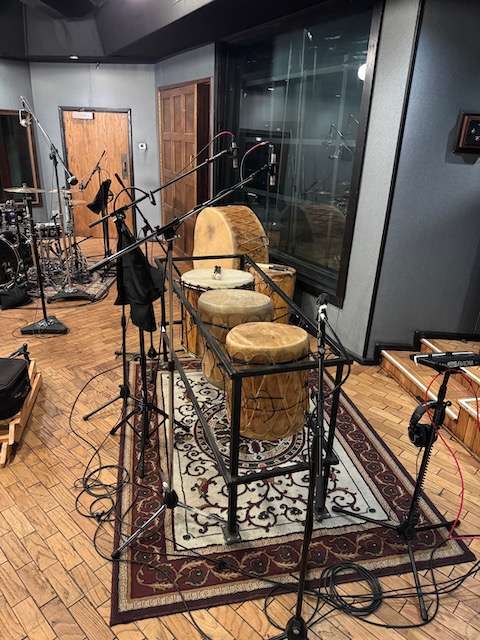
There are moments when the responsible choice is to invite another musician into the process. A performer who has lived with a tradition brings phrasing, touch, tuning and judgment that cannot be reproduced simply by owning the instrument or a sample library.
Collaboration should be more than asking someone to add authentic color after the score is complete. The musician may have insight into the cue’s structure, emotional direction and cultural implications. Bringing that knowledge in early can change the composition for the better.
Credit and compensation matter too. If a musical tradition or performer contributes substantially to the identity of the score, the working relationship should recognize that contribution clearly. Respect is expressed through production practices as well as musical choices.
Avoid Using Instruments as Character Labels
A documentary may include people from several cultural backgrounds. Assigning each person an instrument based on ethnicity can make the score easy to follow, but it can also turn identity into a label.
People may have complicated relationships with heritage. Someone may feel deeply connected to a tradition, reject it, rediscover it later or live between several musical worlds. A fixed instrumental marker cannot express that complexity.
The score can reflect identity through development rather than tagging. A musical color may enter gradually as the film explores a participant’s relationship to family or place. It may combine with another part of the palette as the story moves across generations. The music becomes part of the character’s journey instead of an announcement of background.
Consider Who Is Hearing the Score
A cue may communicate differently to audiences inside and outside the culture represented. An international viewer may hear atmosphere while a community member hears a specific reference, mistake or stereotype.
This does not mean every interpretation can be controlled. It means the team should consider more than the reaction of viewers who lack cultural context. Screenings with knowledgeable listeners can reveal associations that the filmmakers did not anticipate.
The most useful feedback is specific. Does the score confuse two distinct traditions? Does it place sacred material in an inappropriate context? Does it make the community feel historical or exotic when the film presents contemporary life? These responses can guide revision without demanding one approved sound for an entire culture.
Cultural Authenticity Is Not the Same as Literal Reproduction
A documentary score is still a work of interpretation. It does not always need to reproduce the music heard within the community. Literal use may interfere with dialogue, create unwanted lyrical meaning or make the score feel like an ethnographic demonstration rather than part of the film.
Authenticity can come from relationships among sounds rather than direct quotation. The score might respond to the breathing pattern of a traditional performance, the social role of call and response or the way an ensemble distributes rhythm. Those principles can shape original music while respecting the source.
Abstraction requires knowledge. It is difficult to transform a tradition responsibly without understanding what is being changed. Research and collaboration make creative freedom more informed, not less possible.
Be Careful With the Language of Universality
Music is often described as a universal language. That idea can be inspiring, but it may hide real differences in musical meaning. Listeners do not all hear harmony, rhythm, instruments and performance practices in the same way.
A gesture that signals sadness in one scoring tradition may not carry the same association elsewhere. Western cinematic conventions can make a cue legible to a broad audience while overpowering the musical logic of the community on screen.
The goal is not to eliminate familiar film language. It is to decide when that language serves the documentary and when it asks the subject to fit an outside emotional system. A score can communicate across audiences while remaining specific about where its musical ideas come from.
Let Culture Include Ordinary Life
Documentary music often becomes more culturally marked during ceremonies, historical passages or scenes of conflict. Everyday life may receive a neutral score. This pattern can imply that culture appears only during special events.
Identity is also present in work, humor, family routines, popular music and the sound of contemporary streets. A culturally attentive score can recognize those parts of life without turning every scene into a display of heritage.
This wider view protects participants from being represented only through tradition or struggle. It allows the film to show culture as lived, changing and internally diverse.
Build Cultural Understanding Into the Schedule
Research and collaboration take time. Waiting until the score is nearly finished to ask whether a musical choice is appropriate can lead to rushed revisions or defensive decisions.
The production should identify cultural questions early, including regions, languages, traditions, performers and consultants relevant to the story. The composer can then develop a palette with enough context to avoid obvious missteps and enough flexibility to respond as the edit changes.
The next article focuses on composing through the documentary edit. Cultural context is one reason that evolving cuts need careful communication. A new interview, location or archival sequence may change what the score represents and who should be involved in shaping it.
Get Weekly Creative Insights Right In Your Inbox
Email
Recent Posts
Recent Posts

Scoring Documentary Endings Without Creating False Resolution
September 25, 2026
Learn how scoring documentary endings can provide emotional closure while respecting unresolved lives, continuing events and complex truths on screen....
FILM MUSIC
READ
Feature Documentary vs Documentary Series Scoring
September 25, 2026
Compare feature documentary vs documentary series scoring, including themes, episode structure, workflow, schedules and long-form musical continuity....
FILM MUSIC
READ
Composing Through the Documentary Edit
September 25, 2026
Learn how composing through the documentary edit keeps music flexible as interviews, archival footage and story structure continue to change over time....
FILM MUSIC
READ